Direct Answer
5 Core Principles of Aerial Work Platform Safety
- Inspect before every shift. Complete a 10-point visual and functional check; never operate a platform that fails it.
- Set up on firm, level ground. Extend all outriggers or stabilizers and confirm the ground can bear the load.
- Respect the load limit. Rated platform capacity includes people, tools and materials — never exceed it.
- Stay inside the platform. Keep your body within the guardrails and anchored with a certified fall-arrest harness when working at height.
- Keep clear of hazards. Watch for overhead power lines, overhead obstructions, and moving vehicles while elevating or traveling.
When in doubt, stop, lower the platform, and reassess the job site before continuing.
Pre-Shift Daily 10-Point Checklist
Run this checklist at the start of every shift, before anyone steps onto the platform.
Outriggers & stabilizers — fully deployed, locked, no visible damage.
Guardrails & platform — rails, toe boards and gate intact and secure.
Hydraulic system — no leaks from hoses, cylinders or fittings; smooth lift.
Emergency stop — both platform and ground controls stop the machine instantly.
Tires / wheels — correct pressure, no damage, brakes hold on slopes.
Platform controls — lift, lower, drive and emergency functions respond correctly.
Battery & charger — charge level adequate for the shift; cables and connectors sound.
Harness anchor points — certified anchorage present, rated for fall-arrest loads.
Work area — clear of holes, slopes, overhead lines and pedestrian traffic.
Safety decals & manual — operator's manual on board, decals legible.
Platform Types and Risk Differences
Scissor lifts, mast/pillar platforms and mobile lifting platforms behave differently — know which risks apply to yours.
| Feature | Scissor Lift | Mast / Pillar Platform | Mobile Lift Platform |
|---|---|---|---|
| Typical use | Large work areas, vertical access up to ~10 m | Indoor narrow-aisle work, tight spaces | Outdoor loading, maintenance and material handling |
| Main risk | Tipping on uneven ground or from side loads | Stability loss if overloaded; snagging on obstacles | Crushing between platform and overhead beams |
| Key controls | Firm level ground, centered loads, brakes locked | Load limit, overhead clearance, gentle elevation | Outriggers, rated capacity, watch overhead and pedestrians |
| Chenma model | CMLM-E09 Self-Propelled Scissor Lift | Aluminum alloy aerial work platforms (single/double pillar) | CMLM-E01 Channel Steel Lift |
Tipping and Fall Prevention
Most serious aerial platform incidents are tip-overs and falls. Eliminate the causes before they happen.
Ground conditions
- Position the platform on firm, level ground rated to carry the machine's total weight.
- Never set up on soft soil, gravel, drains, manhole covers or freshly graded ground without cribbing or mats.
- Fully extend outriggers or stabilizers and lock them before raising the platform.
- On slopes, drive and elevate only within the manufacturer's rated grade, if at all.
Load limits
- The rated load includes the operator, tools and materials — weigh them together.
- Keep the load centered on the platform; never hang loads from the guardrails.
- Wind reduces effective capacity — lower the platform in gusty conditions.
Guardrails and fall protection
- Keep the platform gate closed and guardrails in place at all times.
- Wear a certified fall-arrest harness and anchor to the designated anchorage point on the platform.
- Never climb on guardrails, use ladders on the platform, or reach beyond the platform rails.
Common Accidents and How to Prevent Them
Four accident classes account for nearly all serious aerial platform injuries.
| Accident type | Typical cause | Prevention |
|---|---|---|
| Tip-over | Uneven ground, overloaded platform, wind, or driving elevated | Level setup, outriggers extended, rated load respected, lower platform before travel |
| Fall from platform | Missing rails, climbing rails, no harness, or leaning out | Guardrails up, harness anchored, stay inside the platform footprint |
| Electrocution | Contact with overhead power lines | Maintain minimum clearance, treat all lines as live, use a spotter |
| Crushing / entrapment | Pinch between platform and beams, or between outriggers and ground crew | Slow travel, watch overhead clearance, keep bystanders clear of the machine |
Charging and Maintenance Safety
Electric platforms such as the CMLM-E09 run on lead-acid battery packs (4x6V / 200Ah). Charge and maintain them safely.
Safe charging
- Charge in a well-ventilated area away from sparks and open flames (lead-acid releases hydrogen).
- Use only the charger supplied for the battery pack; match the voltage and current rating.
- Connect the charger before turning it on, and disconnect after charging stops.
- Check electrolyte level regularly on serviceable lead-acid cells and top up with distilled water.
- Never charge a damaged or leaking battery, and stop immediately if the pack heats abnormally.
Routine maintenance
- Follow the manufacturer's service schedule for hydraulics, pins, bushings and welds.
- Lubricate scissor arms and pivot points to keep lift motion smooth and even.
- Inspect hydraulic hoses for wear or leaks; replace damaged hoses before use.
- Keep the platform controls and emergency stop free of dirt and moisture.
- Only trained technicians may repair the machine; lock out power before any service.
Chenma Aerial Platforms for Safe Elevated Work
Chenma's CE-certified lifting range covers scissor lifts and mobile platform lifts with rated capacities and working heights to match real jobs.
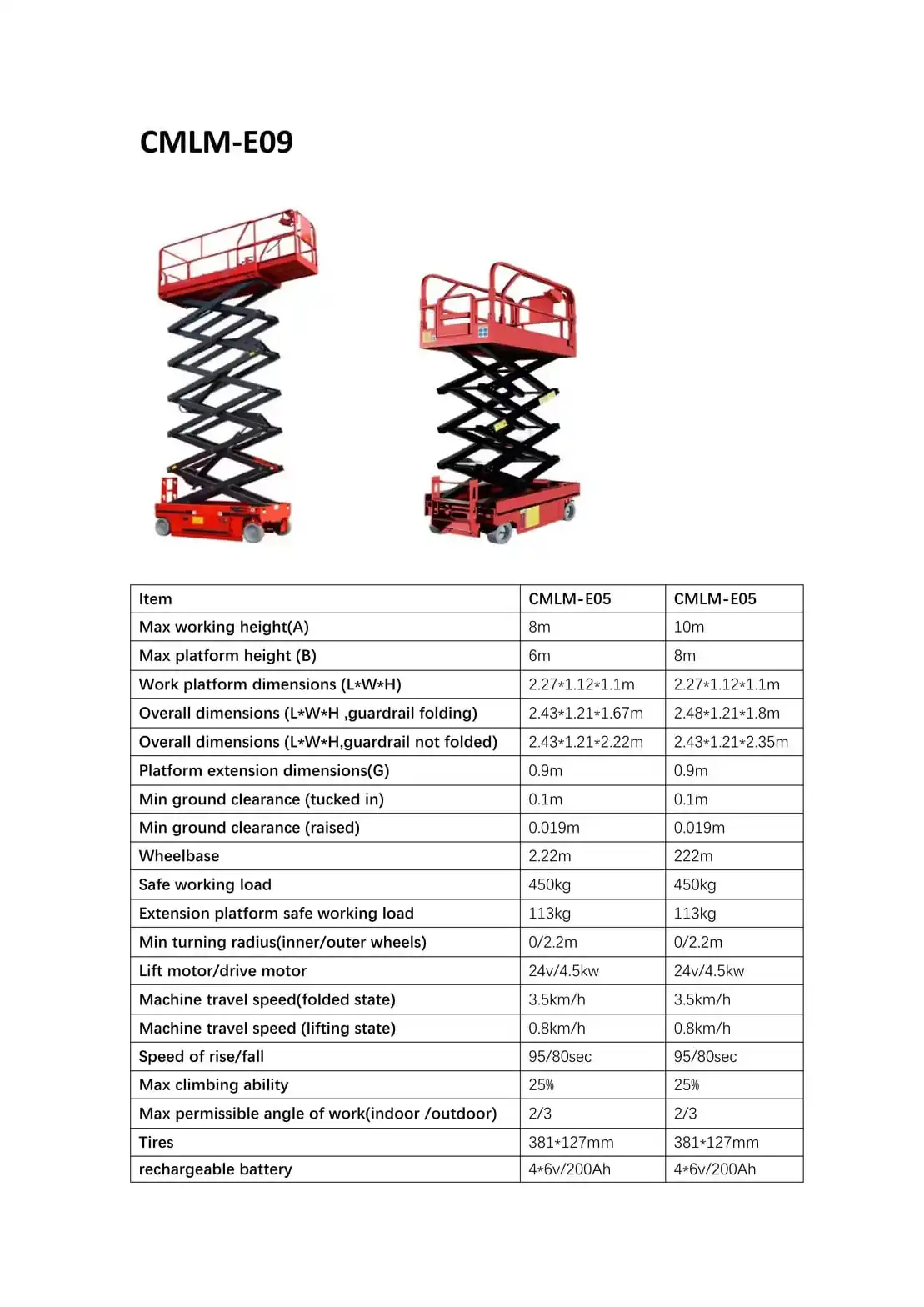
CMLM-E09 Self-Propelled Scissor Lift
Self-propelled scissor lift for large elevated work areas
- Load capacity: 450 kg
- Lift height: 8 m / 10 m
- Power: 24V / 4.5 kW motor
- Battery: 4x6V / 200Ah lead-acid
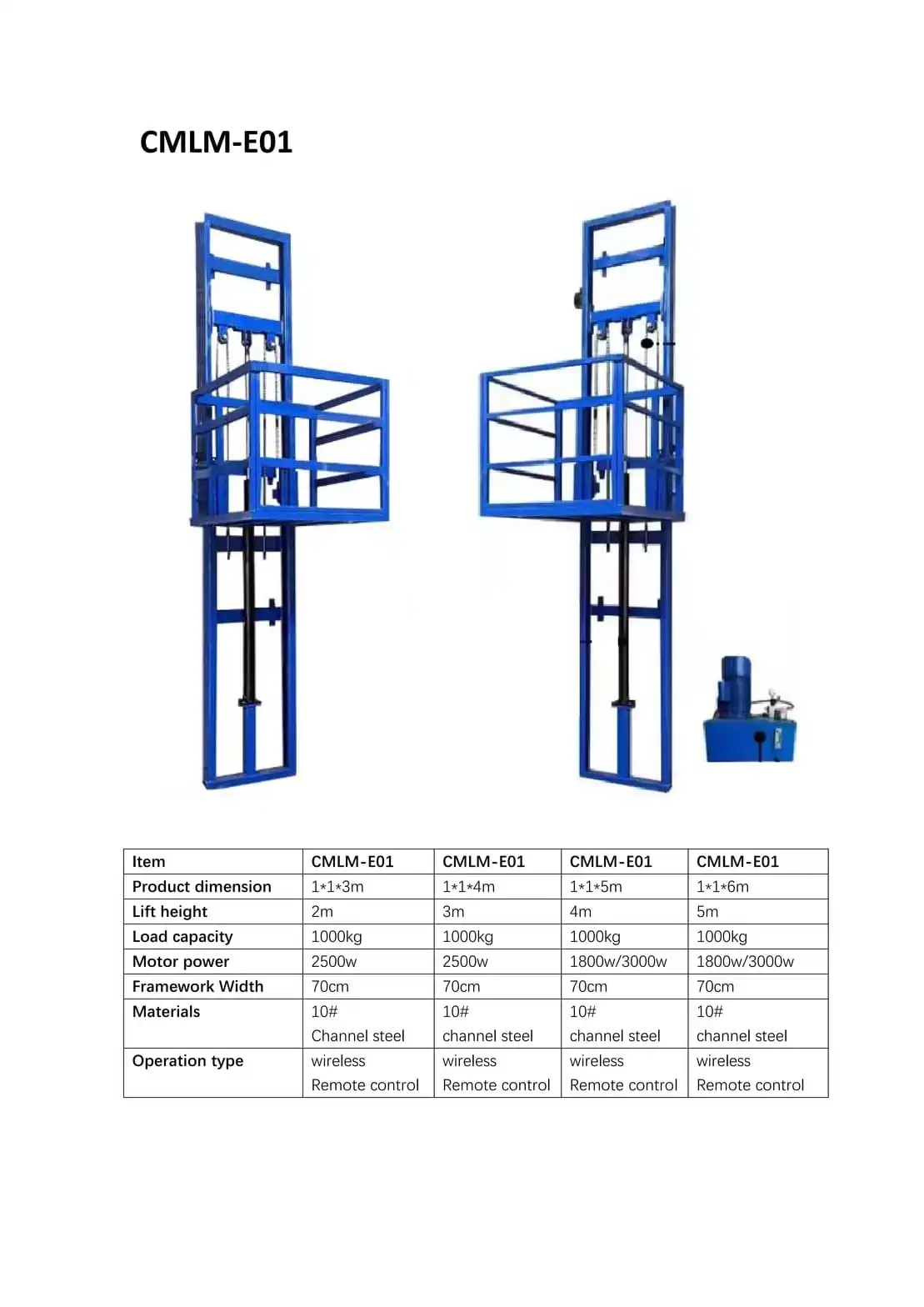
CMLM-E01 Channel Steel Lift
Mobile channel steel platform lift for heavy maintenance work
- Load capacity: 1000 kg
- Lift height: 2 / 3 / 4 / 5 m
- Power: 2500 W (2-3 m) / 3000 W (4-5 m)
Frequently Asked Questions
What daily checks must be done before operating an aerial work platform?
Before each shift, inspect outriggers, guardrails, hydraulic system, emergency stop, tires, platform controls, battery, safety harness anchor points, and the work area. Never operate a platform with a failed pre-shift inspection.
What are the specifications of the Chenma CMLM-E09 self-propelled scissor lift?
The Chenma CMLM-E09 Self-Propelled Scissor Lift has a load capacity of 450 kg with lift heights of 8 m and 10 m, powered by a 4x6V 200Ah battery pack and a 24V 4.5 kW motor.
What power does the Chenma CMLM-E01 channel steel lift use?
The Chenma CMLM-E01 Channel Steel Lift carries 1000 kg with lift heights of 2, 3, 4 or 5 m, and uses a 2500 W motor for the 2-3 m models and a 3000 W motor for the 4-5 m models.
How do I prevent tipping and falls when working at height?
Set up on firm, level ground and fully extend outriggers or stabilizers. Never exceed the rated platform load, keep loads centered, and use the guardrails and a certified fall-arrest harness anchored to the platform at all times above ground.
Safety disclaimer: This guide provides general industry practices for operating aerial work platforms. Always follow the operator's manual of your specific equipment, complete certified operator training, and comply with local workplace safety regulations (including applicable standards for elevated work platforms). When in doubt, stop the machine and consult a qualified technician or your safety officer before proceeding.