How to Choose the Right Electric Stair Climber: A Complete Buyer's Guide
Published: July 27, 2026 · Xi'an Chenma Materials Co., Ltd.
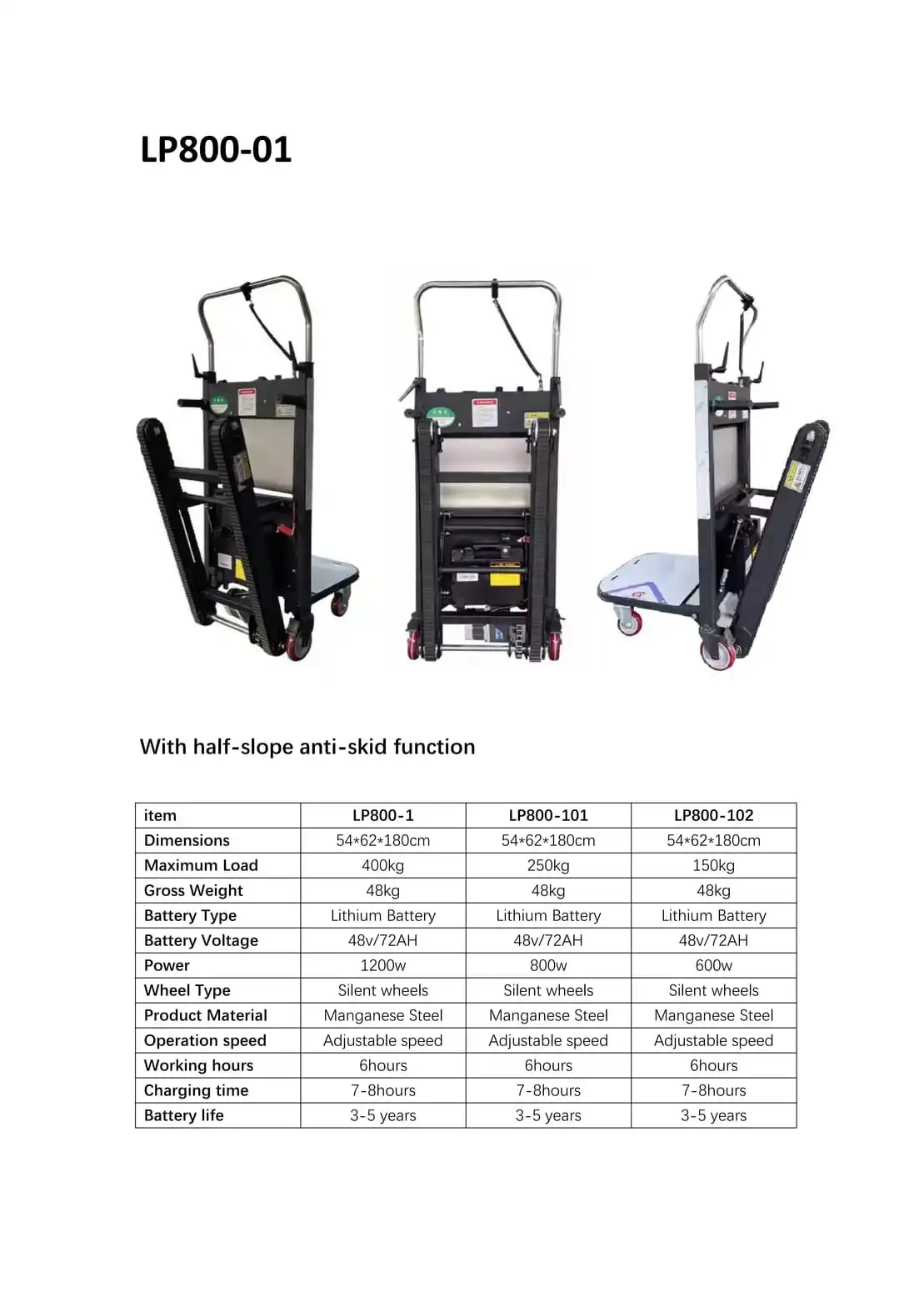
Moving heavy loads up and down stairs is one of the most physically demanding and injury-prone tasks in construction, logistics, and delivery work. A single misstep can damage expensive equipment — or worse, injure your team. That's why electric stair climbers have become essential equipment for professionals who regularly transport appliances, building materials, safes, vending machines, and industrial goods across multiple floors.
But with dozens of models on the market — ranging from compact 150 kg units to heavy-duty 800 kg crawlers — choosing the right electric stair climber isn't just about picking the highest capacity or the lowest price. The wrong choice can mean wasted money, operational bottlenecks, or equipment that simply doesn't work on your type of stairs. This guide breaks down everything you need to evaluate.
What Is an Electric Stair Climber?
An electric stair climber (also called a powered stair climbing hand truck, electric stair climbing dolly, or motorized stair climber) is a battery-powered material handling device specifically designed to transport heavy loads up and down stairs. Unlike a conventional hand truck that requires brute force to bump loads step by step, an electric stair climber uses a motor-driven rotating track system or multi-wheel mechanism to glide over stairs smoothly — with the operator only needing to steer and balance the load.
How it works: The operator secures the load onto the platform with safety straps, tilts the unit back to engage the track system against the stairs, and controls ascent or descent via a simple up/down switch. The motor drives the tracks — typically rubber crawler tracks or rotating wheel clusters — that grip each step edge and lift the load incrementally.
Key industries that rely on electric stair climbers:
- Construction — moving bricks, cement bags, tiles, and tools to upper floors
- Logistics & Delivery — transporting appliances, furniture, and heavy parcels in buildings without elevators
- Moving Companies — relocating safes, pianos, vending machines, and office equipment
- Waste Management — hauling heavy bins and containers up basement stairs
Step 1: Determine Your Load Capacity Requirements
Load capacity is the single most important specification — and the most common source of buyer's regret. A climber rated for 250 kg cannot safely handle a 300 kg load, even occasionally. Rule of thumb: Choose a model rated at least 20–30% above your typical maximum load.
| Capacity Tier | Load Range | Typical Use Cases | Example (Chenma) |
|---|---|---|---|
| Light-Duty | 150–250 kg | Appliance delivery, small packages | LP800-102 |
| Medium-Duty | 250–400 kg | Construction materials, safes | LP800-101 |
| Heavy-Duty | 400–800 kg | Industrial machinery, commercial moving | LP800-1 |
Real-world tip: A 400 kg-rated climber handling 350 kg loads daily will last years. The same climber pushed to 400 kg every trip will need track replacement within months. Always leave headroom.
Step 2: Choose the Right Track System for Your Stairs
Not all stairs are the same — and not all track systems handle every surface equally well. Choosing the wrong track type is the #1 reason electric stair climbers underperform.
| Track Type | Best For | Limitations |
|---|---|---|
| Crawler (Rubber Track) | Concrete, tile, stone stairs; outdoor use | Wears faster on gravel; not for carpet or plastic stairs |
| Rotating Wheel Cluster | Smooth indoor stairs; narrow corridors | Less grip on wet or uneven surfaces |
| All-Terrain Crawler | Mixed surfaces; construction sites | Heavier unit weight; higher cost |
Step 3: Evaluate Battery Type and Runtime
| Battery Type | Runtime | Lifespan | Charge Time |
|---|---|---|---|
| Lithium (Li-ion) | 4–8 hours / 80–120 floors | 3–5 years | 2–3 hours |
| Lead-Acid | 2–4 hours / 40–60 floors | 1–2 years | 6–8 hours |
For professional daily use, lithium batteries are worth the premium. They charge faster, last 2–3x longer, and are significantly lighter — which matters when loading the climber into a van.
Step 4: Understand the Real Cost (Not Just the Price Tag)
The purchase price of an electric stair climber is just the starting point. A proper cost analysis should factor in:
- Purchase price: $1,500–$12,000+ depending on capacity and features
- Battery replacement: Lithium batteries last 3–5 years; budget ~$300–$800 per replacement
- Track replacement: Rubber tracks wear over time; budget ~$200–$500 every 2–3 years with heavy use
- Training: Staff training time — most operators need 1–2 hours to become proficient
ROI Perspective: A $4,000 electric stair climber that prevents one back-injury claim has already paid for itself many times over. A 2-person crew with an electric climber can move 3–5x more loads per day than the same crew using a manual hand truck.
Types of Electric Stair Climbers at a Glance
| Type | Capacity | Best Application |
|---|---|---|
| Standard Crawler | 150–400 kg | General delivery, construction materials |
| All-Terrain Crawler | 400 kg | Outdoor construction, mixed terrain |
| Tank-Type Climber | 300–400 kg | Heavy cylinders, barrels, drums |
| 2-Wheel Compact | 150–250 kg | Tight spaces, narrow staircases |
10-Point Buying Checklist
1. Max load weight — Heaviest single item? Add 20–30% margin.
2. Stair material — Concrete, tile, wood, metal? Does the track type match?
3. Step height — Measure tallest step. Most max out at 20 cm.
4. Staircase width — Room to turn? Crawler models need 80–100 cm.
5. Indoor vs. outdoor — Rain, dust, or uneven ground?
6. Battery runtime — Floors per day? Single charge cover a full shift?
7. Battery type — Lithium (long life, light) or lead-acid (cheaper)?
8. Portability — Folds? Fits in vehicle? Unit weight?
9. Safety features — Emergency brake, speed control, anti-slip tracks?
10. After-sales support — Spare parts, warranty, technical support?
Frequently Asked Questions
What is an electric stair climber?
An electric stair climber is a motorized material-handling device designed to transport heavy loads (typically 150–800 kg) up and down stairs. Unlike manual hand trucks, it uses battery-powered rotating tracks or wheels to climb steps, reducing physical strain and injury risk. Widely used in construction, logistics, appliance delivery, and industrial moving.
What load capacity do I need?
Light-duty (150–250 kg) for appliance delivery. Medium-duty (250–400 kg) for construction materials and safes. Heavy-duty (400–800 kg) for industrial equipment. Always add 20% margin above your typical max load.
How much does an electric stair climber cost?
Entry-level: $1,500–$3,000. Mid-range (250–400 kg): $3,000–$6,000. Heavy-duty (400–800 kg): $6,000–$12,000+. Wholesale and OEM options direct from manufacturers can offer significant savings.
How long does the battery last?
Most models use 48V lithium batteries lasting 4–8 hours or ~80–120 floors per charge. Lithium batteries have a 3–5 year lifespan. Removable battery designs allow hot-swapping for extended operation.
Make the Right Choice for Your Operation
Choosing the right electric stair climber comes down to matching the machine's capabilities to your real-world conditions. Take the time to answer each question in the checklist above, and you'll avoid the most common purchasing mistakes.
As a manufacturer with 15+ years of experience and CE-certified products exported to 50+ countries, Chenma Lifting offers a full range of electric stair climbers — from compact 150 kg models to heavy-duty 800 kg industrial crawlers — with OEM/ODM customization and reliable after-sales support.
Related guide: Commercial and industrial stair-climber selection
Related articles: Electric Stair Climber vs Hand Truck · Small Electric Forklift Guide