How to Move Heavy Items Up Stairs Safely
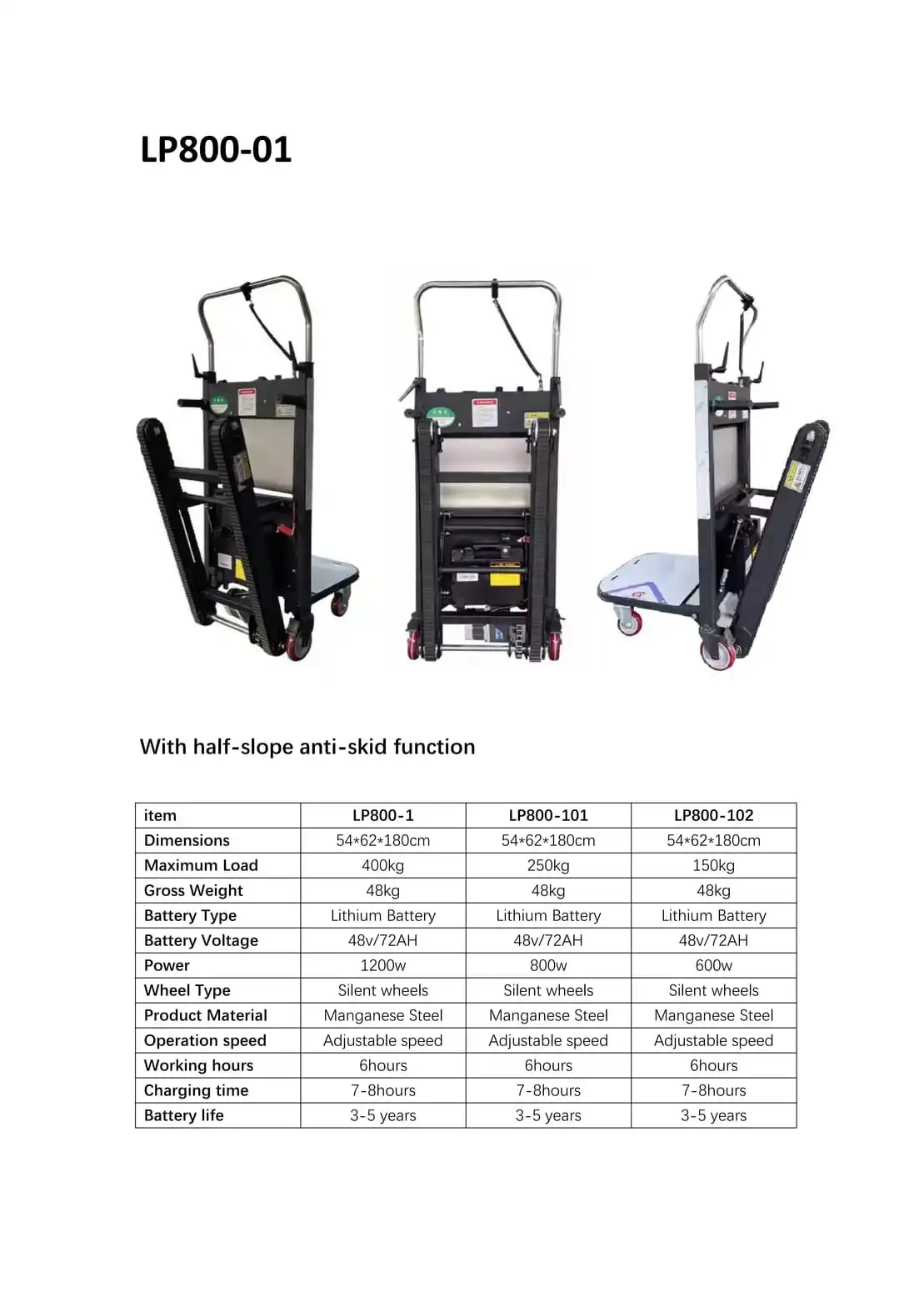
Moving refrigerators, safes, industrial equipment, or heavy furniture up stairs is dangerous when done with muscle power alone. Every year, strained backs, crushed hands, and dropped loads send movers to the hospital. This guide explains the safe method, the common mistakes to avoid, and how equipment like the Chenma LP800-1 electric stair climber (400kg capacity) removes most of the risk.
Direct Answer: The Safe Method in One Paragraph
Never lift a heavy item up stairs manually. Secure the load to a stair climber such as the LP800-1, keep your body upright and hands on the handles, move one step at a time at a controlled pace, and let the machine's motor and braking system do the heavy work.
The 5 Most Common Stair-Moving Accidents
| # | Accident | How It Happens | Prevention |
|---|---|---|---|
| 1 | Back strain / disc injury | Bending and lifting heavy weight repeatedly | Use a motorized stair climber; keep your back straight |
| 2 | Dropped load | Slippery hands or lost grip mid-staircase | Secure cargo with straps; use anti-skid tracks |
| 3 | Falling backward | Load weight overpowers the operator going up | Never exceed rated capacity; move one step at a time |
| 4 | Runaway load going down | Gravity accelerates the load faster than the operator | Use the braking system; never let the machine run ahead |
| 5 | Crushed fingers / toes | Hands or feet in the load path during a slip | Keep clear of the load path; wear steel-toe boots |
Pre-Move Safety Checklist
- Battery Check: Confirm the 48V indicator on the LP800-1 shows a full charge before starting.
- Load Rating: Verify the item weighs no more than the equipment's rated capacity (LP800-1: 400 kg).
- Cargo Securing: Use the provided straps to secure the item so it cannot shift or slide.
- Staircase Clearance: Remove debris, rugs, and obstacles; confirm step height is within the equipment's limits.
- Path Planning: Walk the route first, checking for turns, low ceilings, and landing space.
- Team Coordination: Agree on hand signals if more than one person assists; one operator controls the machine.
- Protective Gear: Wear non-slip shoes, work gloves, and ideally steel-toe boots.
LP800-1 Operating Guide (Up the Stairs)
- Position: Load the item onto the platform and secure it with the straps. Tilt the climber back so its tracks rest on the first step.
- Engage: Use the Up/Down switch to engage the tracks. Keep both hands on the handles at all times.
- Climb: Let the motor drive the tracks up each step. Guide the machine with light pressure - do not push it manually.
- Pace: Move one step at a time, especially on landings and at the top of the staircase.
Descending Brake Techniques (Down the Stairs)
- Brake First: The LP800-1's automatic braking system holds the load when you release the control. Test the brake at the top before committing.
- Controlled Descent: Keep the machine slightly below your center of gravity and let the brake control the speed - never let gravity pull the machine ahead of you.
- Stance: Stand above the machine (uphill side) so you are always pulling it toward you, never pushed by it.
- Landings: Stop and re-balance at every landing; this is where most loss-of-control incidents occur.
Spotlight: LP800-1 Electric Stair Climber
- Max Load: 400 kg
- Battery: 48V / 72AH Lithium (3-5 year life)
- Power: 1200 W motor
- Safety: Anti-skid tracks with automatic braking
- Material: Manganese steel frame
- Work Time: ~6 hours / Charge: 7-8 hours
- Certification: CE certified
Safety disclaimer: This guide provides general industry practices for moving heavy items. Always follow the operator's manual of your equipment, assess each job individually, and do not exceed rated capacities. When in doubt, hire professional movers.