Direct Answer
Use a stop-isolate-inspect-test-record workflow
- Stop: remove the load or secure it only if the table can be made safe, then keep people outside the movement area.
- Isolate: disconnect electrical power where fitted, relieve stored hydraulic energy according to the manual and prevent unexpected movement.
- Inspect: classify the symptom as load, floor, control, hydraulic, structural or safety-device related before replacing parts.
- Test: repair only within the documented service boundary, then run unloaded and controlled loaded tests.
- Record: capture the symptom, cause, repair, test result and return-to-service approval.
Never invent a pressure value, oil grade, motor rating or service interval that the product page or equipment manual does not state.
The Diagnostic Decision Path
Describe
When does the fault occur: empty, loaded, at full height, during descent or after parking?
Separate
Separate load, floor, control, hydraulic, structural and safety-device causes.
Isolate
Make the table safe before removing covers, hoses, pins or guards.
Verify
Confirm the suspected component with an approved inspection or measurement.
Close
Run the approved tests and record the return-to-service decision.
Symptom-to-Cause Troubleshooting Matrix
| Symptom | Isolation questions | Component checks | Repair boundary |
|---|---|---|---|
| Lifts slowly or stalls | Does it happen empty or only under load? Is the load centered and below rating? | Inspect fluid level only if the manual defines the check, filter restriction, hose leakage, pump noise, cylinder condition and control response. | Operator stops and reports. A qualified technician handles pressurized circuit work and valve or pump adjustments. |
| Platform drifts down | Does drift occur with no load or after reaching height? Is a lock or support engaged? | Check cylinder seals, hose/fitting leakage, lowering valve and mechanical supports using the approved service procedure. | Do not hold the platform with improvised blocks or work underneath without approved support. |
| Oil leak | Where is the wet point: hose, fitting, cylinder or reservoir area? | Clean externally, identify the source without touching a pinhole jet and inspect hose routing and fittings after isolation. | Never tighten, disconnect or replace a pressurized line. Use qualified service personnel. |
| Platform shakes or tilts | Is the floor level? Is the load centered? Does movement change when unloaded? | Inspect pins, rollers, frame, fasteners, hydraulic synchronization and platform alignment. | Remove from service if movement is unstable. Structural or alignment repair needs competent inspection. |
| Will not lower | Are people clear? Is the emergency stop or control state blocking movement? Is there an obstruction? | Check controls and visible obstruction; then follow the manual's safe lowering or recovery procedure. | Do not bypass interlocks, force a valve or crawl beneath the platform. |
Hydraulic Circuit and Component Isolation
Circuit sequence
- Start with the reservoir and visible fluid condition only when the manual permits inspection.
- Trace the circuit from pump or power unit to valve, hose, cylinder and return path.
- Compare the symptom before and after isolation; do not replace several components at once.
- Document any approved measurement instead of guessing pressure or flow values.
Component boundaries
- Operator: stop, secure, isolate the area, inspect visible conditions and report.
- Qualified technician: hydraulic pressure work, hose/cylinder/valve service, structural repairs and safety-device testing.
- Electrical specialist: battery, charger, wiring, motor and enclosure faults on electric versions.
- Everyone: no improvised parts, bypasses or unapproved oil/pressure settings.
Repair, Re-Test and Record
| Stage | Required evidence | Release condition |
|---|---|---|
| Fault report | Date, operator, load state, height, symptom, photos and immediate control. | Table identified and isolated if safety is uncertain. |
| Repair | Cause, parts, technician, manual reference and any approved measurement. | No leaks, loose hardware, missing guards or bypassed controls. |
| Unloaded test | Raise/lower cycle, stop control, emergency device and abnormal noise check. | Smooth, stable movement with controls responding correctly. |
| Controlled load test | Verified test load, centered placement, travel and hold result. | Qualified person signs return-to-service record. |
Verified Chenma Products for Repair Planning
The specifications below are copied only from the corresponding Chenma product pages. H10 and H11 pages do not state power, electrical supply, hydraulic pressure, oil type or maintenance interval, so those values are not inferred here.
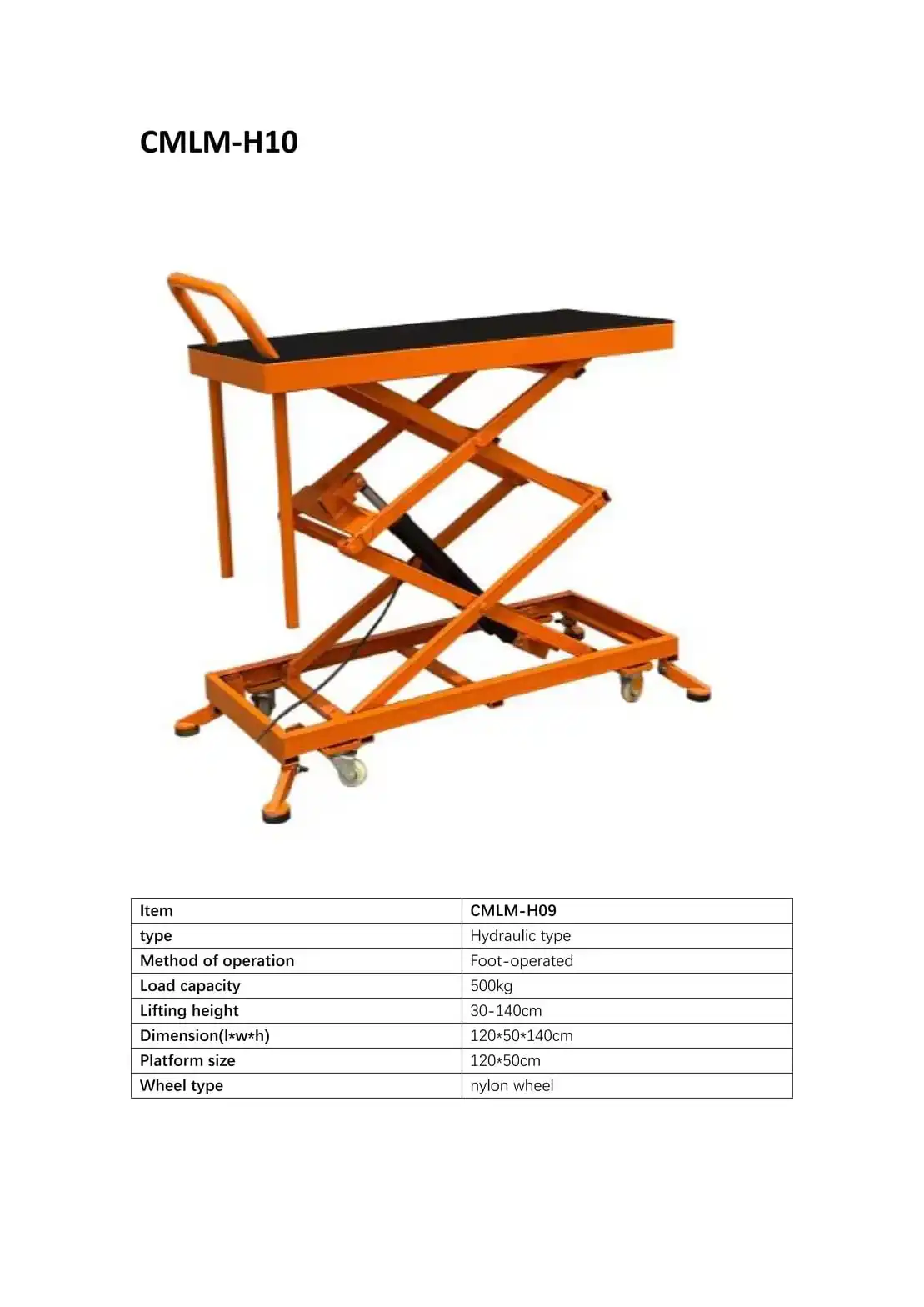
CMLM-H10
- Capacity: 500 kg
- Lift range: 30-40 cm
- Drive: foot-operated hydraulic
- Wheels: nylon
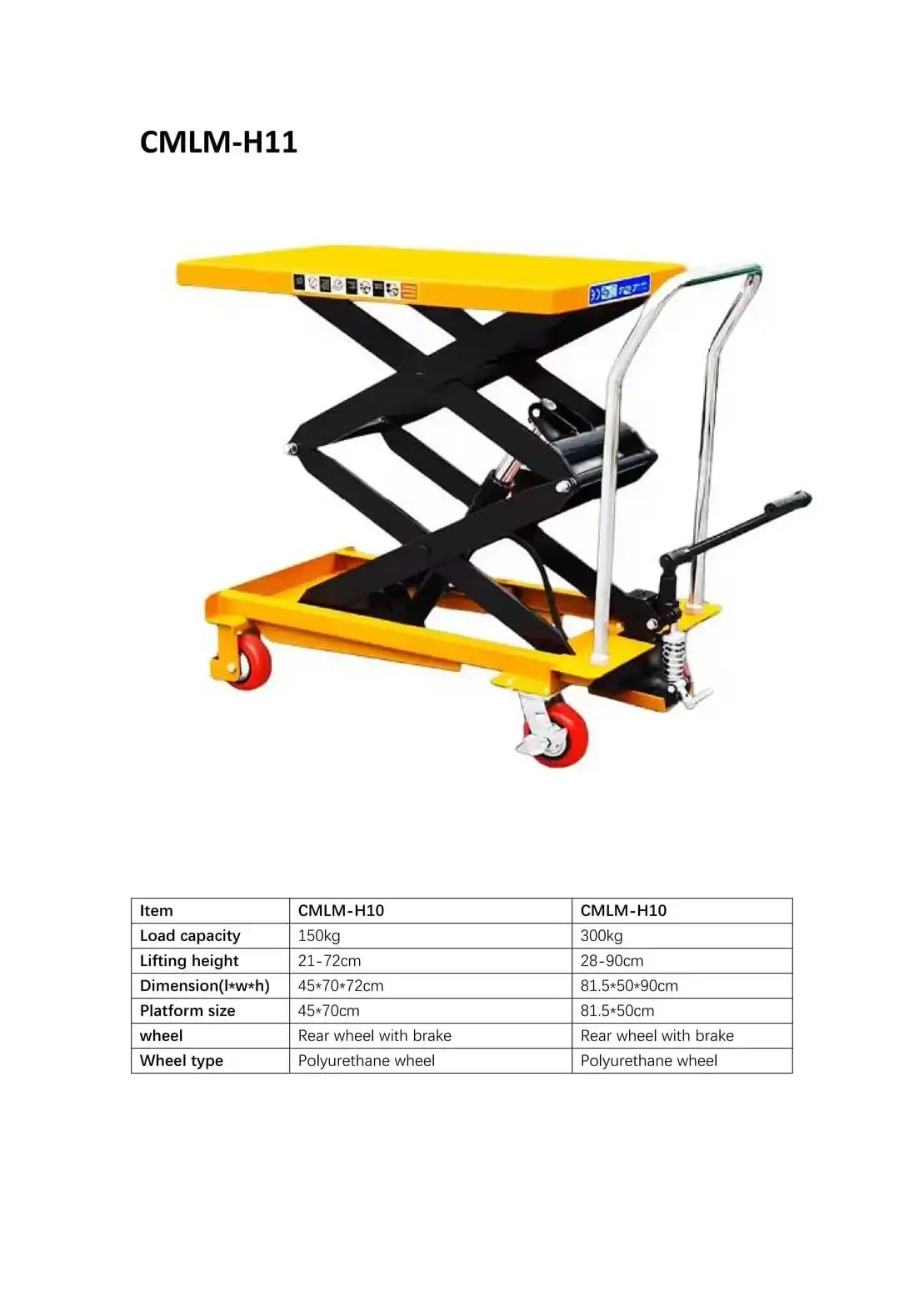
CMLM-H11
- Capacity: 150 / 300 kg
- Lift range: 21-22 cm / 28-30 cm
- Wheels: polyurethane with rear brake
- Power data: not stated on product page
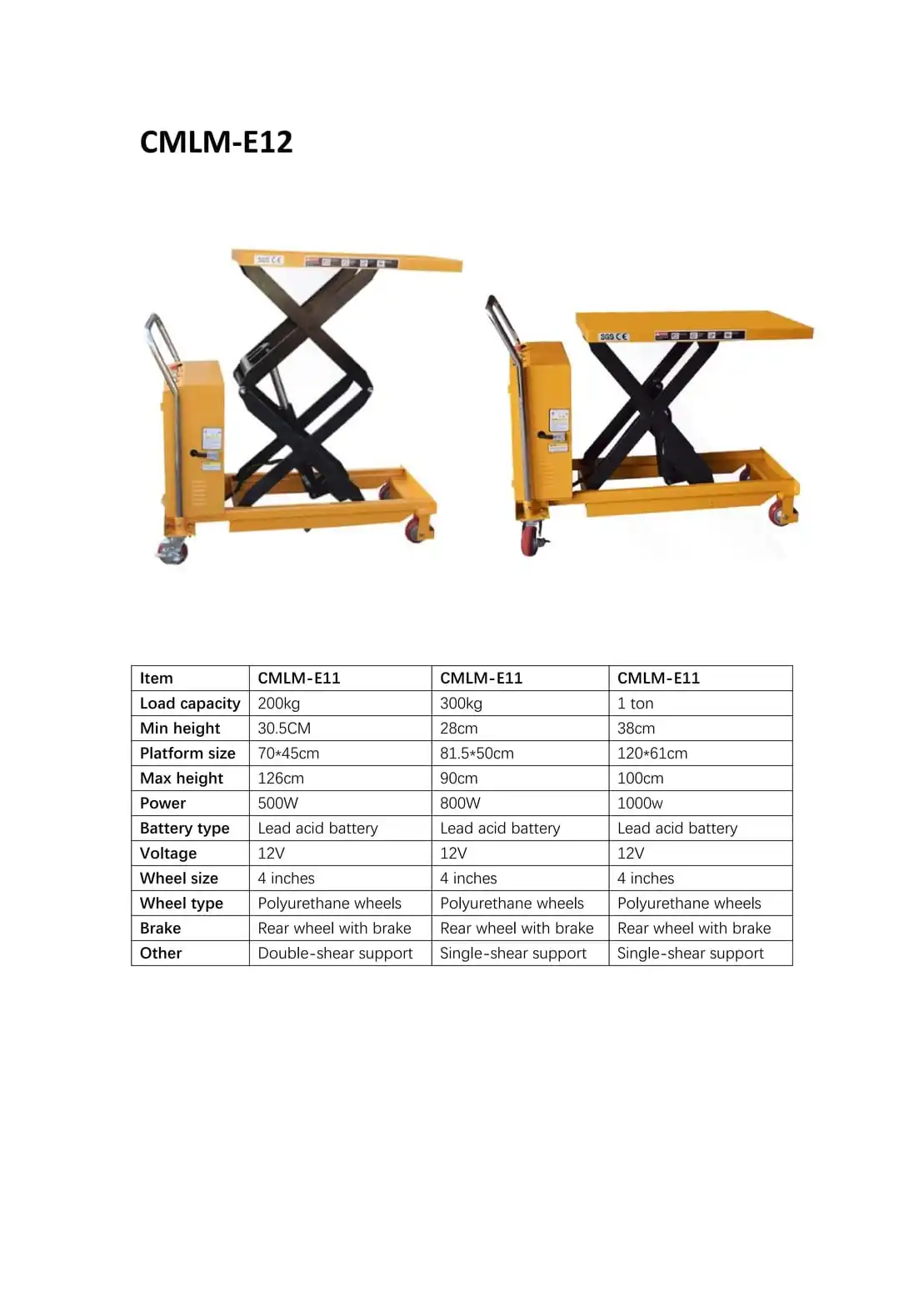
CMLM-E12
- Capacity: 200 / 300 / 1000 kg
- Maximum lift: 126 / 90 / 100 cm
- Power: 500 / 800 / 1000 W
- Battery: 12V lead-acid
Frequently Asked Questions
What is the first step when a hydraulic lifting table develops a fault?
Stop the operation, keep people clear, lower the platform only if it can be done safely, isolate electrical and hydraulic energy as applicable, and record the symptom before inspecting components. Do not continue cycling a table with a safety-critical fault.
Can an operator repair a hydraulic lifting table without a technician?
An operator may stop the table, isolate the area, check visible damage, confirm an obvious overload or obstruction, and report the finding. Pressurized hydraulic work, structural repairs, safety-device adjustments and electrical repairs require qualified service personnel and the equipment manual.
Which Chenma lifting-table specifications are verified for diagnosis planning?
The Chenma CMLM-H10 is rated at 500 kg with a 30-40 cm lift and nylon wheels. The CMLM-H11 has 150 kg and 300 kg configurations with 21-22 cm and 28-30 cm lift ranges and polyurethane wheels with a rear brake. The CMLM-E12 offers 200, 300 or 1000 kg capacities, maximum 126, 90 or 100 cm lift heights, 500, 800 or 1000 W options and a 12V lead-acid battery.
What must be checked after a hydraulic lifting table repair?
Record the fault and parts serviced, then inspect for leaks and loose hardware, run an unloaded raise and lower cycle, test controls and safety devices, confirm stable movement, and perform a controlled load test within the verified rating before returning the table to service.
Disclaimer: This guide provides general troubleshooting guidance, not a substitute for the equipment manual or qualified service. Stop using a table with an uncontrolled descent, structural damage, pressurized leak or failed safety device. Isolate stored energy and use approved mechanical support before working underneath a platform. Confirm all specifications with Chenma before purchase or repair.